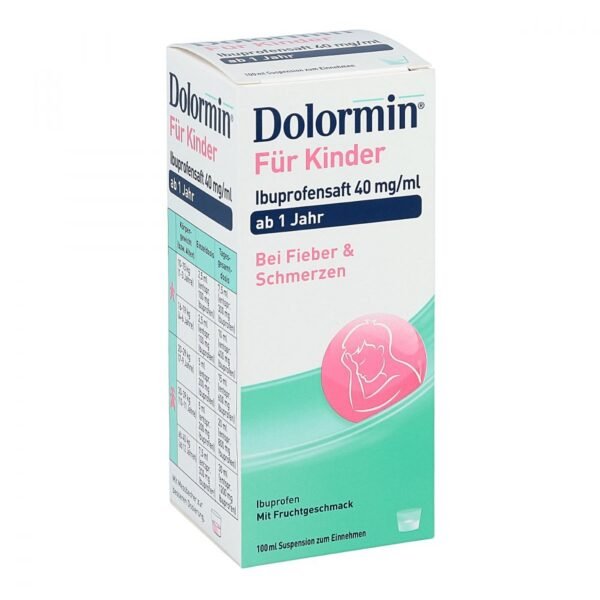
For Kids


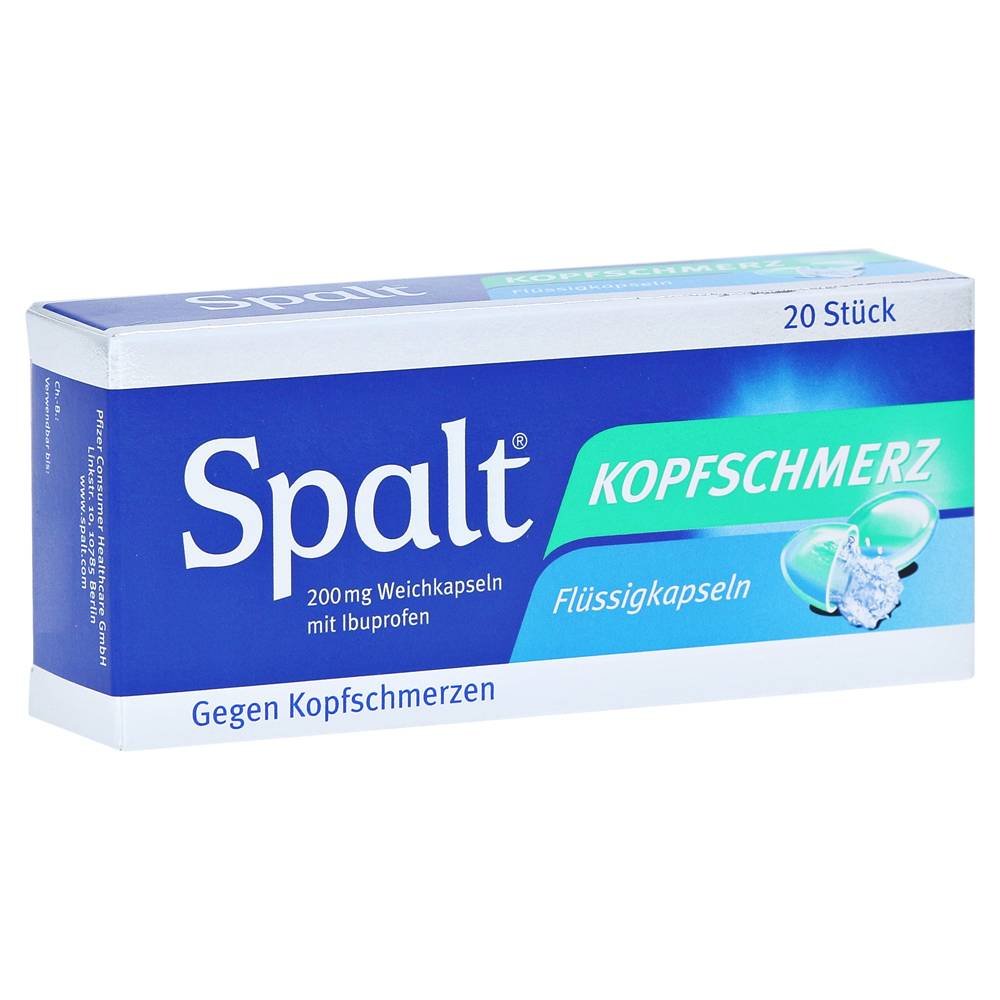



Split headache 200mg soft capsules, 20
€40.75
For mild to moderately severe pain and fever
Has anti-inflammatory and analgesic effects
Oral liquid capsules
Unless otherwise directed by your doctor, the following dosage guidelines apply:
Always take the medicine exactly as directed. Please ask your doctor or pharmacist if you are not sure.
Do not take the preparation for more than 4 days without medical or dental advice.
If children and adolescents continue to use this medicine for more than 3 days, or if symptoms worsen, medical advice should be sought.
Unless otherwise prescribed by your doctor, the usual dose is:
Body weight (age): 20 kg – 29 kg, 6 – 9 years
Single dose: 1 soft capsule (equivalent to 200 mg ibuprofen)
Max. Daily dose: 3 soft capsules (equivalent to 600 mg ibuprofen)
Body weight (age): 30 kg – 39 kg, 10 – 12 years
Single dose: 1 soft capsule (equivalent to 200 mg ibuprofen)
Max. Daily dose: 4 soft capsules (equivalent to 800 mg ibuprofen)
Children and adolescents from 12 years and adults (> 40 kg)
Single dose: 1 – 2 soft capsules (equivalent to 200 – 400 mg ibuprofen)
Max. Daily dose: 6 soft capsules (equivalent to 1200 mg ibuprofen)
If you have taken the maximum single dose, wait at least 6 hours before the next dose.
Dosage in the elderly:
No special dose adjustment is required.
Please talk to your doctor or pharmacist if you have the impression that the effect of the drug is too strong or too weak.
If you take more than you should:
Take the medicine according to the doctor’s instructions or the dosage instructions given. If you feel that you are not experiencing adequate pain relief, do not increase the dosage yourself, but ask your doctor.
Symptoms of an overdose can include central nervous disorders such as headache, dizziness, drowsiness and loss of consciousness (in children also seizures) as well as abdominal pain, nausea and vomiting. Bleeding in the gastrointestinal tract and functional disorders of the liver and kidneys are also possible. In addition, there may be a drop in blood pressure, decreased breathing (respiratory depression) and a blue-red coloration of the skin and mucous membranes (cyanosis).
There is no specific antidote.
If you suspect an overdose of the preparation, please inform your doctor. Depending on the severity of the poisoning, the doctor can decide on any measures that may be required.
If you forget to take a dose:
If you forget to take a dose, do not take more than the usual recommended amount for the next dose.
If you have any further questions on the use of the medicinal product, ask your doctor or pharmacist.
Falls vom Arzt nicht anders verordnet, gelten die folgenden Dosierungsrichtlinien:
Nehmen Sie das Arzneimittel immer genau nach Anweisung ein. Bitte fragen Sie bei Ihrem Arzt oder Apotheker nach, wenn Sie sich nicht ganz sicher sind.
Nehmen Sie das Präparat ohne ärztlichen oder zahnärztlichen Rat nicht länger als 4 Tage ein.
Wenn bei Kindern und Jugendlichen die Einnahme dieses Arzneimittels für mehr als 3 Tage erforderlich ist oder die Symptome sich verschlimmern, sollte ärztlicher Rat eingeholt werden.
Falls vom Arzt nicht anders verordnet, ist die übliche Dosis:
Körpergewicht (Alter): 20 kg – 29 kg, 6 – 9 Jahre
Einzeldosis: 1 Weichkapsel (entsprechend 200 mg Ibuprofen)
max. Tagesdosis: 3 Weichkapseln (entsprechend bis 600 mg Ibuprofen)
Körpergewicht (Alter): 30 kg – 39 kg, 10 – 12 Jahre
Einzeldosis: 1 Weichkapsel (entsprechend 200 mg Ibuprofen)
max. Tagesdosis: 4 Weichkapseln (entsprechend 800 mg Ibuprofen)
Kinder und Jugendliche ab 12 Jahren und Erwachsene (> 40 kg)
Einzeldosis: 1 – 2 Weichkapseln (entsprechend 200 – 400 mg Ibuprofen)
max. Tagesdosis: 6 Weichkapsel (entsprechend 1200 mg Ibuprofen)
Wenn Sie die maximale Einzeldosis eingenommen haben, warten Sie mindestens 6 Stunden bis zur nächsten Einnahme.
Dosierung bei älteren Menschen:
Es ist keine spezielle Dosisanpassung erforderlich.
Bitte sprechen Sie mit Ihrem Arzt oder Apotheker, wenn Sie den Eindruck haben, dass die Wirkung des Arzneimittels zu stark oder zu schwach ist.
Wenn Sie eine größere Menge eingenommen haben, als Sie sollten:
Nehmen Sie das Arzneimittel nach den Anweisungen des Arztes bzw. nach der angegebenen Dosierungsanleitung ein. Wenn Sie das Gefühl haben, keine ausreichende Schmerzlinderung zu spüren, dann erhöhen Sie nicht selbständig die Dosierung, sondern fragen Sie Ihren Arzt.
Als Symptome einer Überdosierung können zentralnervöse Störungen wie Kopfschmerzen, Schwindel, Benommenheit und Bewusstlosigkeit (bei Kindern auch Krampfanfälle) sowie Bauchschmerzen, Übelkeit und Erbrechen auftreten. Des Weiteren sind Blutungen im Magen-Darm-Trakt und Funktionsstörungen von Leber und Nieren möglich. Ferner kann es zu Blutdruckabfall, verminderter Atmung (Atemdepression) und zur blauroten Färbung von Haut und Schleimhäuten (Zyanose) kommen.
Es gibt kein spezifisches Gegenmittel (Antidot).
Bei Verdacht auf eine Überdosierung mit dem Präparat benachrichtigen Sie bitte Ihren Arzt. Dieser kann entsprechend der Schwere einer Vergiftung über die gegebenenfalls erforderlichen Maßnahmen entscheiden.
Wenn Sie die Einnahme vergessen haben:
Falls Sie die Einnahme einmal vergessen haben, nehmen Sie bei der nächsten Gabe nicht mehr als die übliche empfohlene Menge ein.
Wenn Sie weitere Fragen zur Anwendung des Arzneimittels haben, fragen Sie Ihren Arzt oder Apotheker.