


 For Kids


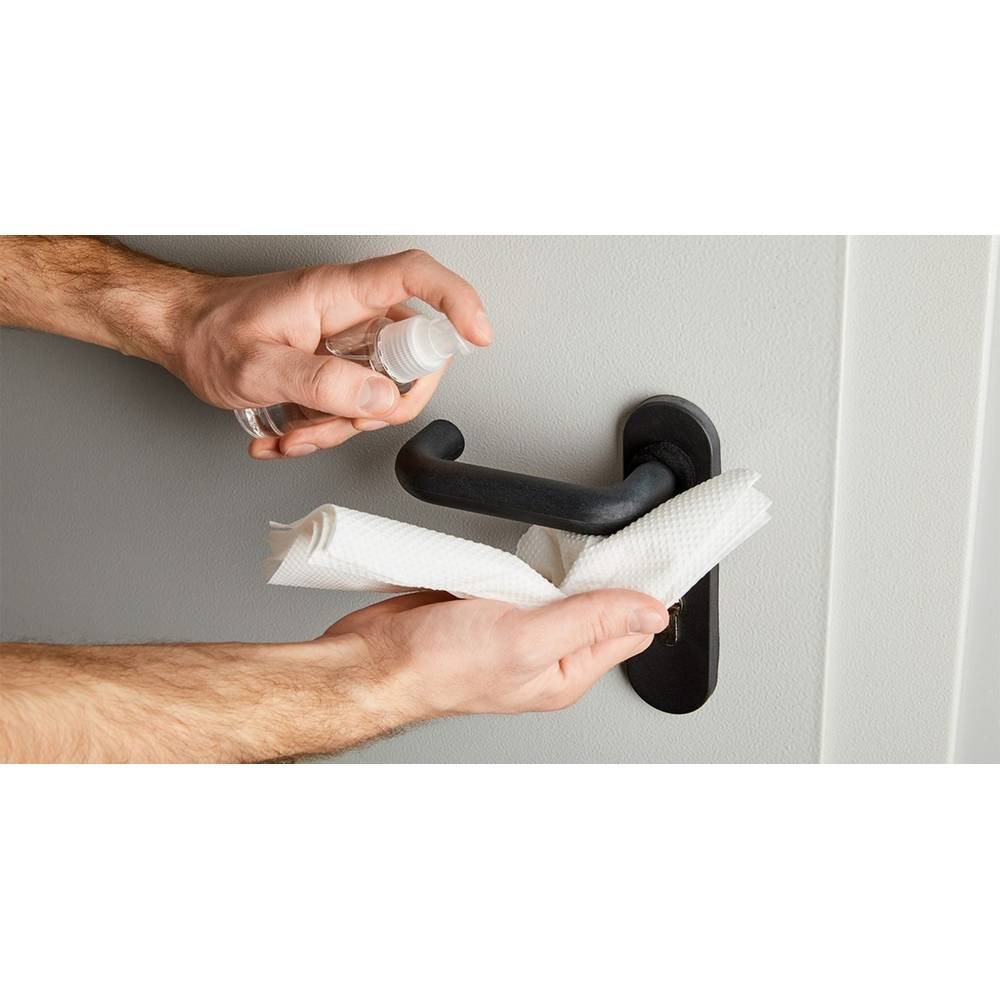

The main difference between sterilization and disinfection is that sterilization is the process of destroying all forms of microbial life, including spores present in an object, while disinfection is the process of reducing or removing harmful microorganisms from inanimate objects and surfaces.
Micro-organisms are ubiquitous. Since they cause contamination, infection, and decomposition, it is necessary to remove or destroy them from materials or sites by decontamination. Sterilization and disinfection are two ways of decontamination. Disinfection aims to destroy microbes to a level that the infection does not transmit, but it does not necessarily kill all the microbes present in an inanimate object. However, sterilization is a decontamination process in which all the micro-organisms present in an item are destroyed, and therefore the item becomes sterile. Thus, the sterilization process kills spores, including bacterial endospores. In short, we can say that sterilization kills all micro-organisms present in an object or place, whereas disinfection only reduces the amount of harmful micro-organisms to prevent transmission.
CONTENT
1. Overview and main differences
2. What is sterilization
3. What is disinfection
4. Similarities between sterilization and disinfection
5. side-by-side Comparison-sterilization and disinfection in tabular form
6. Summary
What is sterilization?
Sterilization is the process of destroying all forms of microbial life, including bacteria, spores, viruses, and prions. Therefore, the method of sterilization used depends on the purpose, the material to be sterilized, the nature of the microorganism present, and so on.at the end of the sterilization process, the treated object can be considered as a sterile object, since it does not contain microbes or spores. Sterilization – two modes; physical methods, as well as chemical methods. Physical methods include heating, radiation, and filtration, while chemical methods include liquid and gaseous chemicals.
In addition, the combination of physical and chemical methods (physico-chemical methods) is also associated with sterilization. Various commonly used sterilization methods include steam sterilization, heating, chemical sterilization, radiation sterilization, and sterile filtration.
Moreover, the ideal sterilizing agent is one that could function effectively and efficiently under any circumstances and should have the following characteristics.
Must be able to destroy all types of micro-organisms, including viruses, bacteria and fungi.
This should not negatively affect medical instruments.
Must act quickly, allowing the use of tools designed for various methods of sterilization and disinfection.
What is disinfection?
Disinfection is the process of destroying harmful pathogens in their vegetative state and reducing the number of microorganisms to levels that no longer pose a threat to human health. The purpose of this is to prevent the transmission of certain microorganisms with objects, hands, or skin and to prevent the spread of infection.
Disinfection is carried out with disinfectants, and they are antimicrobial agents that are applied to non-living objects to destroy the microorganisms that live on the objects.
It is important to understand that disinfection only reduces the number of microorganisms and does not completely destroy them. Accordingly, disinfectants are widely used in our daily lives. They are of two types; a broad spectrum that acts on a large variety of microorganisms, and a narrow spectrum that acts on a small variety of microorganisms. In addition, they are easy to use, non-toxic and relatively inexpensive. Commonly used different disinfectants: alcohols, aldehyde, oxidizing agent, phenols, polyaminopropyl etc.
What are the similarities between sterilization and disinfection?
Sterilization and disinfection are two methods of decontamination of objects.
Both methods use physical and chemical methods.
In addition, both are effective methods for preventing the transmission of infections and diseases.
In addition, both methods are usually used every day for different purposes.
What is the difference between sterilization and disinfection?
The main difference between sterilization and disinfection is that sterilization is the process of destroying all microorganisms present in an object, while disinfection is the process of destroying or reducing pathogens from an inanimate object. In addition, a significant difference between sterilization and disinfection is that sterilization is able to destroy microbial spores, while disinfection is not able to destroy spores.