


 For Kids



Every country, region or nation has its own traditional strange recipes.
Kutti Pi
Despite the cute and cute name, this dish is decidedly lacking any connection with humanity, because kuti pi is nothing but the embryo of a goat. This terrible delicacy is not available for free sale in India, and in some regions it is completely illegal. Kutti pi is eaten by descendants of mixed marriages between Hindus and Britons who live in their own separate commune. This commune has long had its own laws, traditions and, as we can see, tastes. The goat embryo dish is considered a very rare delicacy also because it is prepared only if the slaughtered adult domestic goat was pregnant. Anglo-Indians believe that this delicacy is useful for pregnant women, as well as for patients with tuberculosis or osteochondrosis.
Extracto de Rana
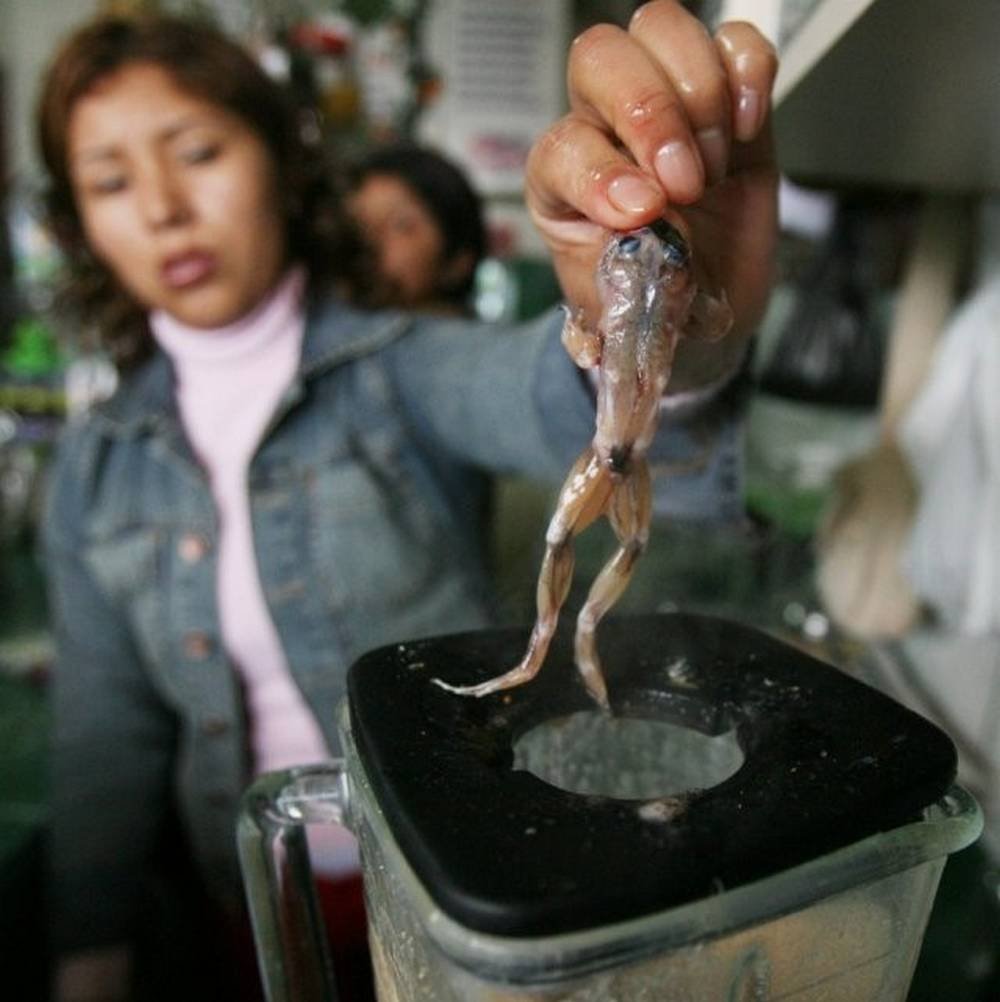
The frog is an amphibian in itself, which you don’t really want to pick up. Slimy skin, a long tongue and beliefs about warts have done their job: many avoid toads. However, there is a dish in the world that has spread over the Network because of the fashionable flash games 10-15 years ago. It was called “Frog in a Blender”. Many users played it, but did not even suspect that such a culinary delicacy is really common in Peruvian cuisine. The dead frog, along with the vegetables, is run in a blender until a mush is formed. Then this drink is poured into cups and served with lemon zest. Peruvians believe in the beneficial properties of this drink-allegedly, it is useful for memory. But sometimes you want to forget some things. For example, that you tried such a delicacy.
The Cass Mn
The concept of fastidiousness adheres to a strict framework. One worm in the meat – and a person bypasses this butcher shop by the tenth road. One cockroach in the bread or a fly in the soup in this restaurant more than a foot. All these emotions are quite natural and understandable for anyone who fears for their health and stomach. But on the island of Sardinia, such notions of fastidiousness are absent, because it is here that an extremely rare and terrible delicacy called “Kazu Marzu”is made. This dish is a completely rotten pecorino cheese infested with live maggots. These larvae feed on the proteins and fats of cheese, turning it into a sticky mass. In addition to the disgusting smell and possibly taste, you should also be wary of these small insects – being frightened, these larvae can jump directly into the face of an extreme eater, bite painfully or even get on the mucous membrane of the eye. If this still happens, you should immediately consult a doctor. But if you still managed to bite off at least a piece, be prepared for a fire in your mouth – the larvae arrange a real riot on the tongue and bite painfully. Italian doctors, by the way, banned the sale of this product, as it is considered dangerous to health (come on!). At the same time, a rare Sardinian wedding does without this terrible delicacy.
Balut
This dish is a real nightmare for vegetarians. If they still somehow put up with eating eggs and allow this in the diet, then after meeting with balut, one mention of eggs will make them want to clear their stomach. Balut is a hard-boiled egg with a duck embryo inside. Yes, that’s right — fertilized eggs are kept for several days under a warm lamp so that the embryo develops evenly. As soon as it has legs and a beak, the egg is ready for cooking. This delicacy is in great demand in the Philippines, where it is a delicious snack for beer. Despite the enormity of the preparation of this dish, the locals eat it without a twinge of conscience. But what’s so special about an unborn duckling? Small vessels? Soft bones or the broth? However, since this dish is widely popular, it means that there is something in it after all.
Kopalkin (egunak)
Kopalkin (egunak) is a national dish for the Chukchi and the Nenets. However, the representatives of the northern peoples themselves in every possible way protect curious tourists from tasting this dish. Such a protest is explained by the very recipe for cooking copalchen. In order to cook it, only one ingredient is required: a healthy young deer. For several days the deer is not fed, then strangled (so as not to damage the skin), then the corpse is immersed in the swamp under a layer of peat and sprinkled with branches. After a few months, the corpse is removed and consumed in writing. The rotten meat of a half-decomposed deer is cut into thin slices and dipped in salt. But what is good for the Evenk or Nenets is deadly for other nationalities. Doctors came to this conclusion because of the huge concentration of cadaveric poison that accumulates in the meat of the killed animal. Kopalchen, according to the natives, was invented as a dish that will not let the hunter die during a snowstorm, which here can last several days. The delicacy became especially popular after the famous extreme Bear Grylls spent several days in the Far North, where he got acquainted with this dish and told about it in his program.
Hakarl
Chukchi – not the only one who eats a meal of rotten meat. In other northern regions of the planet, such as Iceland, there is a hakarl-a dish of rotten meat of the Greenland giant shark. But unlike the thrifty Nenets, this dish is prepared in Iceland on big holidays, especially at Christmas and New Year. Eating rotten shark meat shows the true strength of spirit and fortitude that has long been inherent in the Vikings. And the Vikings had to have iron not only armor, but also stomachs. In fact, the existence of hakarl is explained simply-shark meat is quite a weighty and nutritious product, it is a pity that it is poisonous. Fresh meat contains huge amounts of uric acid and trimethylamine, which are extremely dangerous for humans. But rotten shark meat, cut like squid and packaged, can be eaten even by children. However, manufacturers are asked to cover their noses so that the smell from the habit does not hit the nose too much.
Akutaq
Eco Technologies like almost everything. But what if everything around you resembles a huge refrigerator? In permafrost conditions, it is impossible to make ice cream the way we are used to seeing it: from cow’s milk or cream. The Eskimos, residents of the far North, were able to get out of this situation and came up with akutaq is the national dish of Northern peoples. This delicacy is frozen with berries or sugar deer, walrus or seal fat. Despite the incongruity of the ingredients, this product has even gained a certain popularity, which we do not see anything wrong with. In fact, compared with embryos of duck and rotten meat, akutaq – it is a harmless ice cream recipe. Akutaq give eskimo children as sweets in order to diversify their diet. This dish is also served in some restaurants in Yakutsk, Nadym and other northern cities of Russia. And those who are outraged by such a recipe for ice cream, we ask you to remember another popular children’s treat – a useful hematogen from the blood and milk of a cow.
Civic
This dish has nothing to do with kiwi. Moreover, in those latitudes where it is popular, kiwi has never been heard of. Civic is on the menu of Northern peoples spread from Chukotka to Greenland. It requires a seal and several gulls to prepare it. Several plucked gulls are placed in the seal carcass. In each region, the process is different: in some places, gulls are put directly into the stomach, and in some places, instead of gulls, they use lyurik. Then, when the seal is stuffed in this way, the seam on the shkur is carefully covered with seal fat, which perfectly repels insects. The blank is carefully masked and buried for six months. This time is enough for the birds inside the seal to decompose, and their enzymes have time to be processed in the intestines of the animal. After six months, the carcass is removed, cut into slices and eaten raw. They say it tastes like spicy cheese. Many tourists are interested in the process of making kiwifruit, but only a few are not afraid to try it.
Puffer fish
Puffer fish are very fond of playing with death and walking on the very edge. Such antics cause an influx of adrenaline, without which many extreme athletes simply can not live. This also applies to the kitchen, because in the kitchens of different peoples there are enough recipes for poisonous and even deadly dishes. One of the most popular is puffer fish, which has only one correct cooking recipe. All other variations can end in the death of the taster. Most toxic toxins are found in the liver of fish. Despite this, it is better to entrust the preparation of fish to a professional, because even touching this fish is worth it with caution. Fish is served raw or stewed with vegetables. The hype around such a “dinner with death” has arisen for a long time, so the demand for fish has not fallen for decades. Despite this, there are not many deaths from this fish recorded in history. The most famous victim of the poisonous inhabitant of the ocean, was the actor Bango Mitsugoro, who died from the toxic fugu poison in 1975. So, if you decide to try puffer fish, choose a restaurant where it is properly prepared for you.
Dried apricots
The whole Japanese cuisine is specialized on seafood. Sushi, rolls, sashimi or soups are all made from fish or shellfish. But among other things, there are also dishes in Japanese cuisine designed to tickle the nerves. Dancing cuttlefish, which is also a Japanese delicacy, can not be compared to a dish called “Dried Apricots”. Dried apricots are nothing but jellyfish in a special sauce with crackers. The method of preparation is quite simple: in the Sea of Japan, a jellyfish is caught, then it is dried so that the jellyfish does not wither, and then sprayed with vinegar.